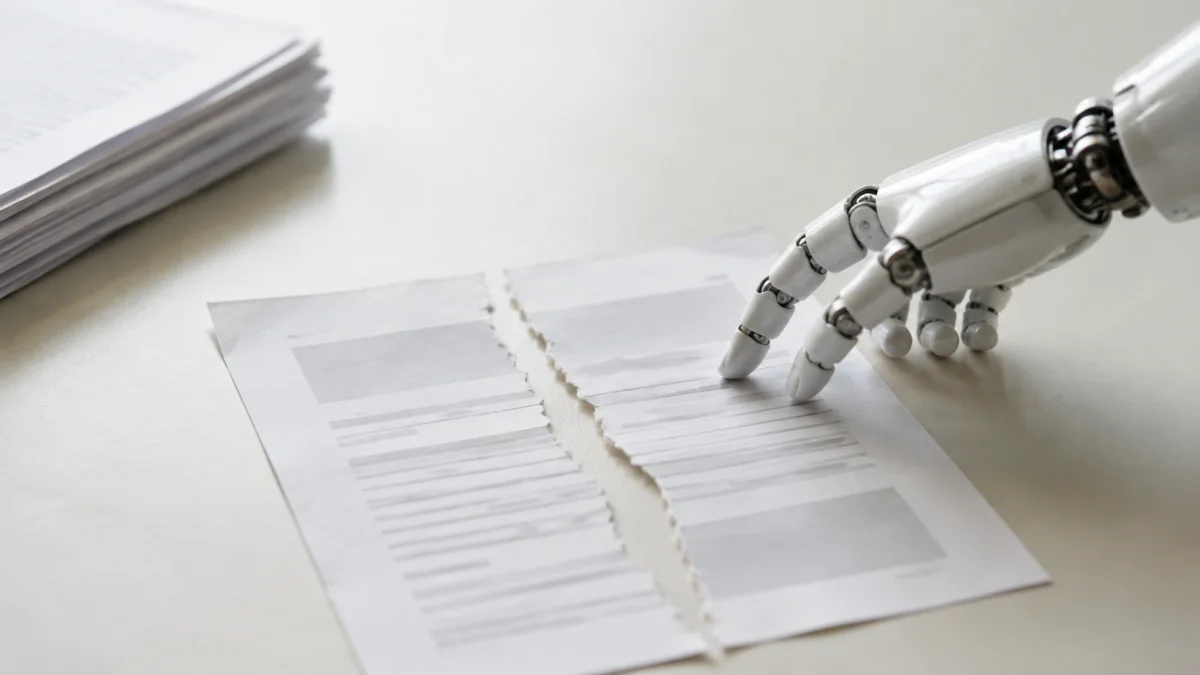

"Token-Padding" Forced by Metrics: How Amazon Employees Respond
Reports say Amazon internally treats AI-tool usage as a performance signal, so employees invented "tokenmaxxing": finding ways to pad usage high, whether or not it's useful.
Reports say Amazon internally treats AI-tool usage as a performance signal, so employees invented "tokenmaxxing": finding ways to pad usage high, whether or not it's useful.
A lovely personal project: bothered by repeatedly waking in the night, the author had AI help throw together a recording-plus-analysis tool, and finally found the culprit.
A flame-baiting but substantive piece: Python's core advantage is being friendly to humans, but when code is mostly AI-generated and humans only review, how much is that advantage still worth?
A pointed manifesto: AI inference should happen on your own device by default, with the cloud the exception. The reasons run from privacy to cost, and it faces the reality of the capability gap head-on.
A practical post borrows the old "unreasonable effectiveness" meme to make a plain point: having Claude Code produce native HTML directly is often smoother than reaching for a framework.
An arXiv paper systematically tests the risk of "handing files to an LLM agent to process": across a range of tasks, the agent quietly corrupts your files at a non-trivial rate.
A detailed usage log: the author took a real, thorny problem to test ChatGPT 5.5 Pro, and the process had both dazzling moments and a classic crash.
An observation from the security world: AI is simultaneously disrupting two cultures that have run for years—vulnerability discovery and vulnerability disclosure—with overcapacity on one side and collapsing trust on the other.
A widely circulated polemic takes aim at mass-produced AI content: it's not just ugly—it's draining away what online communities live on, the trust between real people.
An engineering essay argues that the mocked "vibe coding" and the revered "agentic engineering" are actually two ends of the same spectrum, differing in discipline rather than essence.
In response to "an AI agent deleted my production database"-style disasters, this piece traces the chain of responsibility: it was AI that hit enter, but human decisions paved the whole road.
Users found that Chrome downloaded and enabled the Gemini Nano on-device model without explicitly asking for consent, and the several-gigabyte "silent gift" raised privacy questions.
Showing 12 of 12 stories