

There are two fundamentally different forms of translation: text translation and speech translation. Text translation relies on the translation engine itself; speech translation must first pass through a more treacherous hurdle—speech recognition. In noisy airports, conversations with accents, or fast-paced negotiations, the machine must "hear correctly" before it can "translate correctly." This is precisely where most translation tools fall short, but it is iFlytek’s stronghold, built over more than twenty years of expertise. In the field of Chinese speech recognition, iFlytek is the industry benchmark itself.
All product logic for iFlytek Smart Translator stems from this core premise: reimagining translation with speech as the entry point. Its most iconic form isn’t even software, but a piece of hardware—the iFlytek Translation Machine. This category was essentially defined by iFlytek in China and has become a staple in the luggage of frequent international travelers.
What is iFlytek Smart Translator?
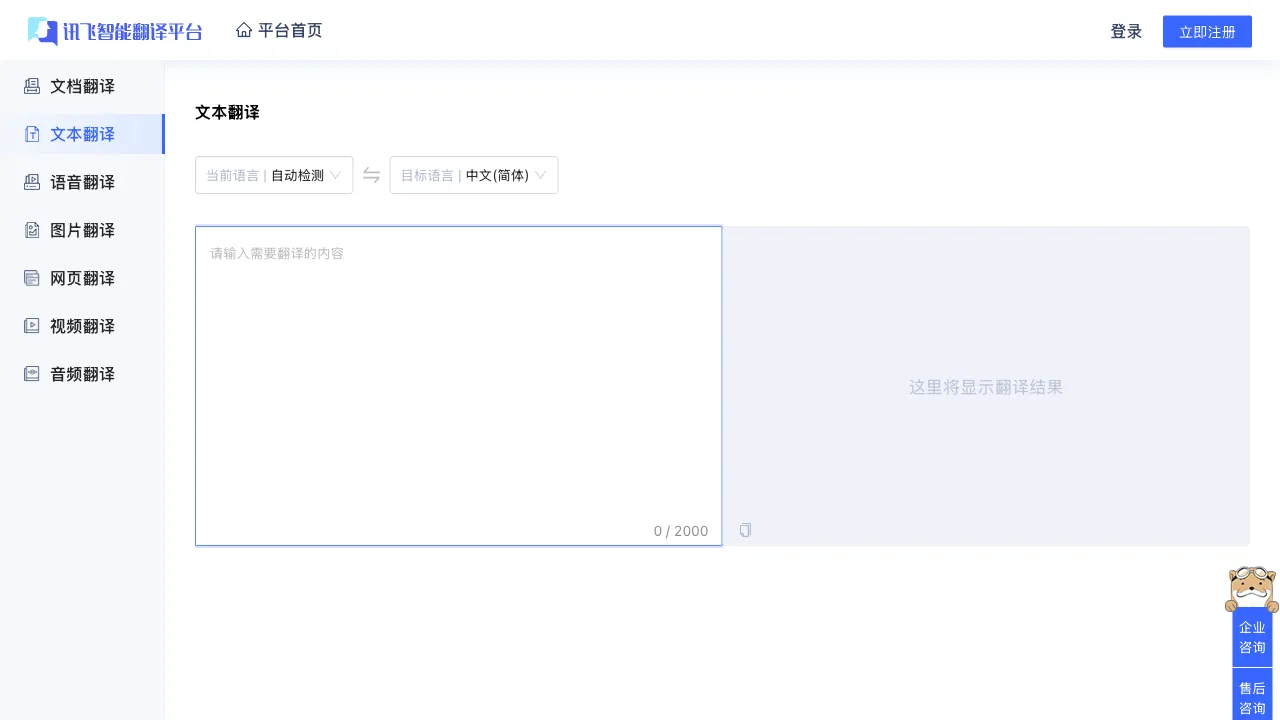
iFlytek Smart Translator is iFlytek’s translation product matrix, covering four forms: the online translation web page (fanyi.xfyun.cn), the Translation App, Translation Machine hardware (dual-screen/consecutive interpretation series, a category-defining product), and the Translation API on the iFlytek Open Platform. With Chinese as its axis, it supports dozens of languages including English, Japanese, Korean, French, German, Spanish, and Russian, with some products offering offline translation packs.
The key to understanding it lies not in its feature list, but in its scenario positioning: while others focus on desk-side "look-up and translate" tasks, iFlytek focuses on "speak-to-translate" scenarios—business negotiations, international travel, and cross-language meetings. These are the domains of "real-time human-to-human communication."
Core Features
Speech Translation: The Core DNA
Speak into the device, and it instantly recognizes, translates, and reads out the result in the target language—turning the "human simultaneous interpretation" of cross-language dialogue into a device-driven process.
The experience ceiling for this feature is determined by speech recognition, which is iFlytek’s dominant territory: Mandarin recognition accuracy sets the industry standard, while tolerance for dialects and accented Mandarin is its unique depth (recognizing Sichuan-Chongqing or Cantonese accents, areas where other tools often fail). Noise resistance in chaotic environments has also been refined over years of hardware development. This foundation of "accurate listening" makes iFlytek’s speech translation significantly more usable in real-world conversations than paper specs suggest.
Real-time Subtitles and Simultaneous Interpretation
An advanced form for conference scenarios: generating bilingual subtitles in real time from a continuous audio stream, allowing participants who don’t understand the language to follow along by watching the screen. iFlytek’s simultaneous interpretation subtitle technology has served numerous formal conferences; bringing this capability down to consumer products adds depth to its translation matrix.
Text, Document, and Image Translation
The standard trio for desk-side translation is fully equipped: instant text translation, full-document format-preserving translation for Word/PDF files, and photo OCR translation (menus, signs, manuals). The quality is at the mainstream domestic level—this section is about "completeness," not "specialty." In pure text translation needs, it’s hard to distinguish from Baidu Youdao.
Translation Machine Hardware
A dedicated device independent of smartphones: professional microphone arrays (far superior sound pickup and noise resistance than phones), dual-screen dialogue (each party sees their own language), offline translation packs (works without internet), and instant-on usability. For frequent international travelers and business hosts, the hardware form factor solves all the awkwardness of "taking out a phone, opening an app, and handing it over." iFlytek leads this category in market share and has built a solid reputation.
Comparison with Similar Tools
vs. Baidu/Youdao Translation: All three are in the same tier for text translation; the divergence lies in speech—iFlytek’s recognition accuracy (especially with accents and in noisy environments) represents a genuine generational gap. For desk-side look-ups, any tool works; for on-site dialogue translation, iFlytek’s foundation is stronger.
vs. Google Translate: The king of language coverage with a mature conversation mode, but its unavailability in China is a fatal flaw; iFlytek connects directly within China, surpassing Google in Chinese speech recognition accuracy.
vs. Caiyun Translation: Caiyun excels in specialized Japanese and bilingual reading, while iFlytek excels in speech and hardware ecosystem—niche specialists versus speech dominance, each guarding its own territory.
vs. Shikonghu and other translation earbuds: A battle of new translation hardware forms; earbuds are more discreet, while translation machines are more formal; iFlytek’s speech recognition foundation remains the root of its hardware competitiveness.
vs. Large Model Translation: Large models have higher ceilings for precise translation and stylized scenarios; but for "real-time, bidirectional, speak-to-translate" on-site scenarios, the latency and stability of dedicated speech translation links remain a product-level advantage—their battlefields do not yet overlap.
Who is iFlytek Smart Translator For?
Frequent International Travelers: Asking for directions or ordering food abroad; the combination of speech translation + photo translation + offline packs is configured for this scenario. At high frequencies, investing separately in a translation machine hardware is worthwhile.
Cross-language Business Professionals: Foreign trade reception, multinational negotiations, international conferences—real-time dialogue translation and simultaneous interpretation subtitles are dignified and practical productivity tools. This is the core purchasing demographic for iFlytek Translation Machines.
Chinese Users with Heavy Accents: For users with non-standard Mandarin or habits of mixing dialects, iFlytek’s recognition tolerance makes "speech-to-translation" truly usable for the first time—this pain point is rarely addressed seriously by competitors.
Developers Needing Speech Translation APIs: If your product needs to embed "speak-to-translate" capabilities, the iFlytek Open Platform is the most mature supplier in China along this technical line.
Limitations
Pure text translation offers no obvious advantage; desk-side translation needs are not a reason to choose it—choosing iFlytek means choosing its speech scenarios, so keep your positioning clear.
The product matrix is fragmented (web/App/hardware/API each have their own entry points), requiring some time for new users to find the right form; small language coverage lags behind Google, with the main focus still on mainstream pairs like Chinese-English, Japanese, and Korean.
Hardware translation machines require a separate purchase decision (priced from hundreds to two thousand RMB); light needs can be met by the App alone—don’t buy hardware just for occasional trips abroad.
Pricing
The web version and App basic features are free (with usage quotas), with advanced features paid; Translation Machine hardware is priced by model; APIs are billed by call volume, with free trial quotas available. Refer to the official website for specifics.
The logic for choosing iFlytek Smart Translator can be summarized in one sentence: Is your translation need "reading/writing" or "listening/speaking"? For reading/writing, pick any tool on the market; for listening/speaking—especially in scenarios requiring real-time dialogue with live people—iFlytek’s twenty years of speech expertise is the most trustworthy card in that arena.