

In the competitive landscape of AI image generation, each player’s strategy is distinct: Midjourney sellsUltimate quality, OpenAI bundles DALL·E into ChatGPT to sell intelligence, and Stability pursues open source. Meta’s approach, however, follows its ancestral playbook for everything it does—it doesn’t charge money; it embeds itself into the social scenarios of three billion people. Imagine with Meta is the product of this strategy: a completely free image generation tool that functions both as an independent website and as a feature readily available within Instagram, WhatsApp, and Messenger chat boxes.
Its ambition has never been to win over creators, but to make "generating an image" as mundane as sending a meme—something only a company holding the world’s largest social network can achieve.
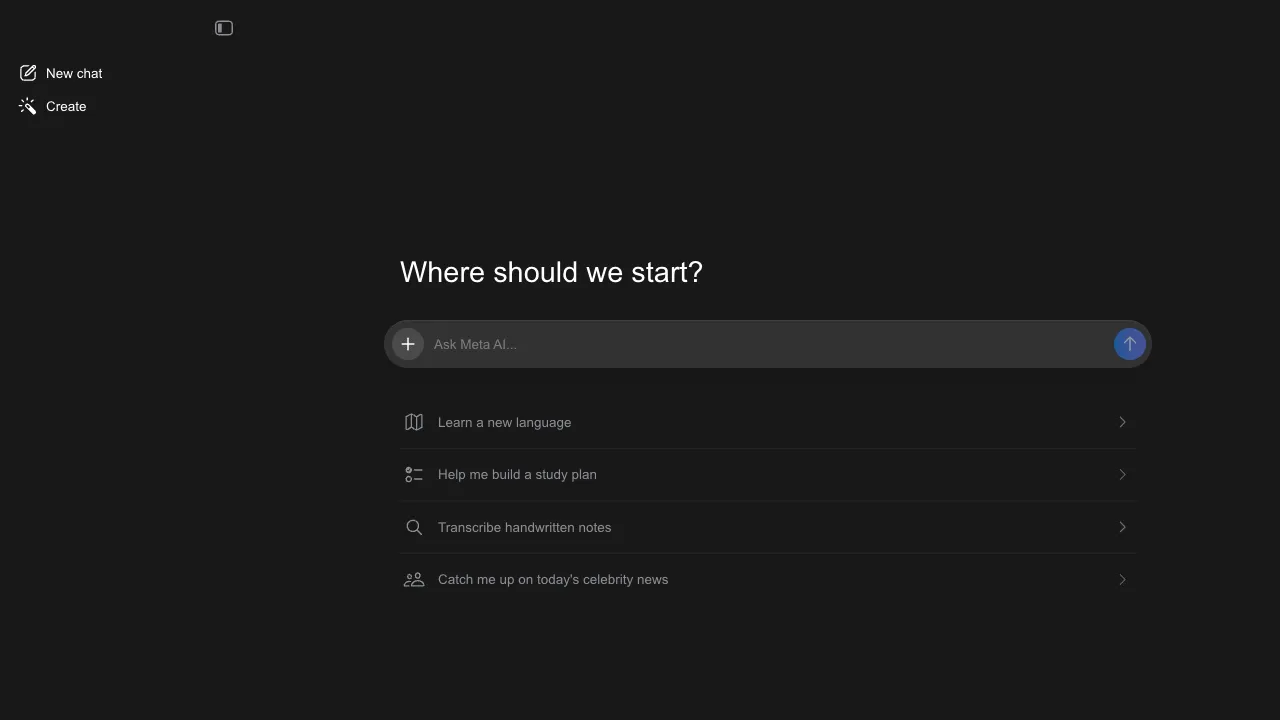
Entry point changed (checked 2026-09-06): the standalone imagine.meta.com domain now issues a permanent 301 redirect to www.meta.ai. Image generation lives inside the unified Meta AI entry point and is no longer maintained as a separate product. The capability notes below still apply; use meta.ai as the entry.
What is Imagine with Meta?
Imagine with Meta (imagine.meta.com) is Meta’s free AI text-to-image tool, powered by its proprietary Emu image generation model. The training philosophy behind this model is very "Meta": after pre-training on massive datasets, it was fine-tuned using high-aesthetic images from Instagram, giving its outputs a naturally bright and appealing "viral social media photo" vibe. This capability has continued to evolve and integrate into the Meta AI assistant ecosystem, becoming a standard feature across its suite of products.
The barrier to entry is virtually non-existent: access directly via the web, log in with a Meta account (Facebook/Instagram), and start generating for free.
Core Features
Text-to-Image
Input a natural language description, and it returns four candidate images. A key characteristic of the Emu model is that it is friendly to plain descriptions—you don’t need incantations like "8k, masterpiece, cinematic lighting." Simply write as you would describe something to a friend, such as "golden retriever playing in the snow at sunset," and the result will be bright, clear, and well-composed. This reflects the appropriate tone for a product aimed at the general public: it eliminates the need for prompt engineering entirely.
Native Integration into the Social Ecosystem: The True Ace Card
The standalone website is merely the storefront; ecosystem integration is the core body:
- WhatsApp/Messenger: Mention @Meta AI in a chat along with a description, and the image is generated and sent directly—giving the "meme war" arms race generative ammunition.
- Instagram: Call upon AI to generate backgrounds and assets within the Story and Post creation workflows.
- Facebook: Built-in generation entry points for post images.
This form of "image generation as a chat feature" changes not the ceiling of image quality, but the floor of usage frequency—hundreds of millions of people who have never heard of Midjourney generate their first AI image right inside a chat box with a friend. In terms of contributing to user education for AI image generation, Meta’s route may surpass the sum of all professional tools combined.
Strict Content Safety
Meta’s investment in content moderation matches its platform responsibility: the generation of violence, pornography, real people, and misleading content is strictly blocked. Generated images carry both visible and invisible watermarks (to facilitate the identification of AI-generated content). This makes it suitable for all-ages, public social scenarios—though it also means a sacrifice in creative freedom, a trade-off dictated by its positioning.
Comparison with Other Tools
vs Midjourney: The gap in image quality, artistic merit, and style control is significant; MJ remains the tool for creators. Imagine’s response is free + zero barrier to entry + social integration—the two are not even on the same battlefield: one serves creation, the other serves chat.
vs DALL·E 3/GPT-4o Image Generation: OpenAI’s route offers stronger complex semantic understanding and conversational iteration, but requires a subscription. Imagine is free, and for simple descriptions, it generates images quickly and reliably. In the battle for free options among light-need users, it competes directly with Microsoft Copilot (which also provides DALL·E capabilities for free).
vs Stable Diffusion/Flux Open Source: Local deployment gives more choice of models and parameters, with a runtime to maintain. Meta takes an open-model approach with Llama, while Imagine is offered as an image-generation product.
vs Domestic Tools (Jimeng, Wenxin Yige): The realistic choice for domestic users—since Meta products cannot be directly accessed in China, this alone determines that Imagine is more of an object of "awareness" than "usage" for Chinese users.
Who Should Use Imagine with Meta?
Active Users of the Meta Suite: Daily users of Instagram and WhatsApp will find the generation function built right into their chat boxes; this is the most natural way to experience it—and precisely the entire purpose behind its design by Meta.
Zero-Cost Early Adopters: Those who don’t want to register new accounts, don’t want to pay, and just want to see what AI image generation looks like already have a ticket: their existing Facebook account.
Lightweight Social Content Creators: Users seeking the sweet spot of "good enough and free" for Story backgrounds, post images, or group chat memes.
AI Industry Observers: Those wanting to understand the proposition of "how generative AI moves into daily life," Meta’s social integration route is one of the most important samples and deserves hands-on experience.
Limitations
Image quality and control capabilities are mid-tier among mainstream tools; it basically does not offer support for professional creative needs (fine style control, image-to-image, parameter adjustment)—this is not a shortcoming, but positioning: it never intended to serve professional creators.
The strictness of content filtering occasionally misfires on normal requests; the inherent watermarks on generated content limit certain use cases.
For domestic users, network accessibility is a prerequisite, which effectively excludes it from the daily tool list for most Chinese users.
Pricing
Completely free, with no subscriptions or pay-per-use (subject to rate limits to prevent abuse); log in with a Meta account to start.
The significance of Imagine with Meta is less about being a tool and more about being a signal: when image generation is shoved into the chat boxes of three billion people for free, this technology officially demotes from a "novel capability" to "infrastructure." Professional creators don’t need to look at it, but if you want to know what the "final state of daily AI image usage" looks like—it is the preview version of that answer.