

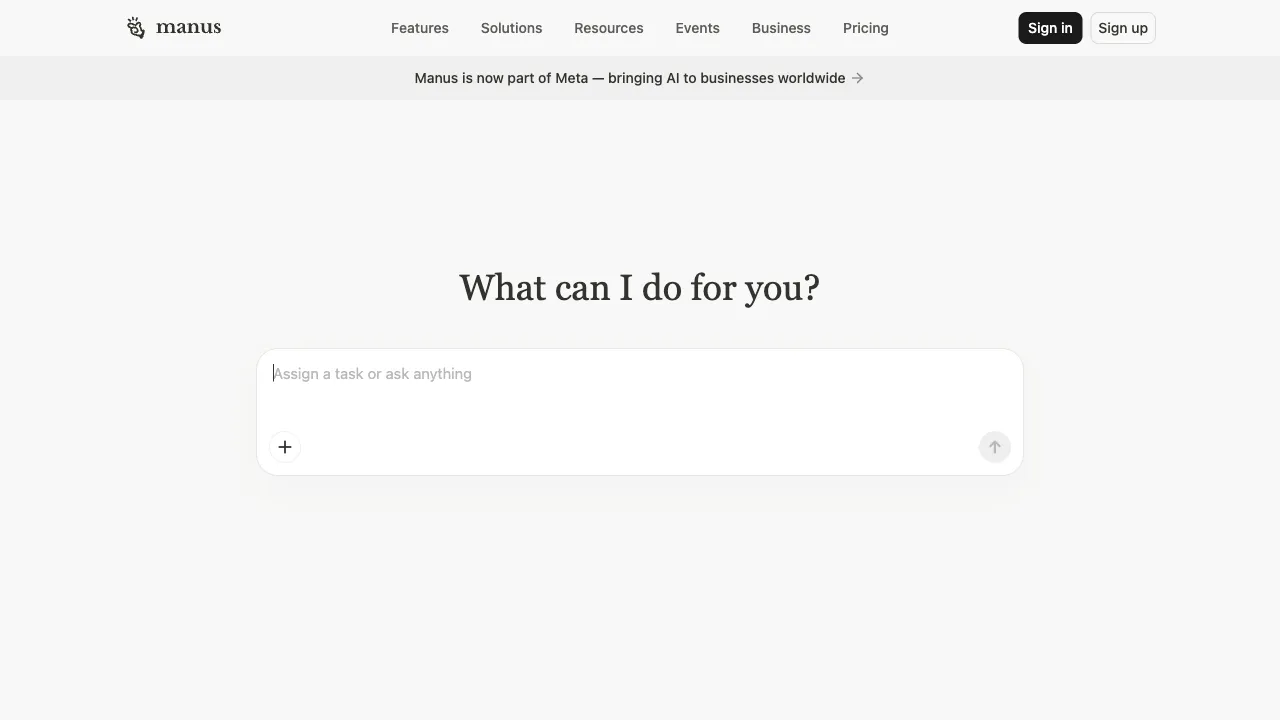
Manus is an AI agent platform built around multi-step execution. Its September 28, 2026 announcement introduces Cascade, Manus Studio, purchasable Cloud Computers and event-triggered Automations.
Why 2.0 changes the overview
Earlier descriptions emphasized delegating a cloud task and receiving an artifact. The 2.0 announcement emphasizes continued work within a project, with environments for documents, spreadsheets, PDFs, slides, websites, code, games and video. Readers should check how an initial result can be edited, not only how quickly it can be generated.
Cascade is a new iteration of the vendor’s agent harness, introducing specialized capabilities when needed. The efficiency figures in the announcement come from one vendor test; compare time and cost on your own tasks.
Studio: continue editing the first draft
According to the announcement, the desktop application becomes Manus Studio. Its video environment has a timeline with editable clips, images, text, animations and audio; users can change materials and ask Manus to continue editing. The game environment provides running previews, assets, code editing and publishing.
We suggest starting with your own material and a small scope, specifying length, page structure or interactions and requesting editable artifacts. Check editability, assets and actual behavior. Generation alone is not release acceptance; domains, hosting, rights and maintenance remain separate considerations.
Cloud Computer: a persistent project environment
The announcement describes purchasable Cloud Computers for projects such as multiplayer servers and ongoing automations. This corrects the old absolute statement that every task starts from scratch without a persistent workspace. A purchased environment should not be described as an included feature of every free task.
Establish runtime, connections, stopping and data-export needs before checking current prices and resources. Ordinary tasks, Studio projects and persistent environments should not be treated as one fee. A one-off file organization task does not necessarily justify ongoing infrastructure.
Automations: events as well as schedules
The announcement extends scheduled work to events in connected services: email, calendar events, Slack messages, Notion updates and ad-performance changes. Actual connectors and account permissions determine availability; examples are not a complete supported-service list.
We recommend initially drafting or organizing information after a trigger, retaining human confirmation for sending or payments. Use controlled samples to check duplication, missed conditions and old data being mistaken for new events. Ongoing tasks need inspectable records and a stopping mechanism.
Computer use and remote access
Official information describes an authorized connected session in which Manus uses approved files, browsers and apps within its own visible workspace on the user's computer, with remote observation from a phone. This depends on the connection, version and authorization, not inherent access to every local file.
Define the task and grant necessary access. Check recipients and actions for sending, purchases, deletion and uploads. System permissions, application controls and already signed-in websites are different layers; see the computer-use permission guide.
Cue is a separate product
The same announcement introduces Cue at cue.im. Shared infrastructure accompanies a distinct emphasis on agent email, phone, wallet, computer and group collaboration, with separate early-access conditions. Do not assume a Manus subscription includes every Cue capability or shares its allowance.
Meta Muse is Meta's personal-agent product. Start with Manus Studio for creation and continued editing; verify exact Cue or Muse service support for personal communication and connected-app tasks.
Specify an accepted deliverable
A manageable first task is a table of public product information with consistent fields, sources and checking dates. Request unknown fields rather than a vague best-product verdict. Inspect whether sources actually support prices, features and eligibility before expanding the task.
For creation, specify supplied materials, required changes, export format and protected content. For automation, add triggers, stopping conditions and actions needing human confirmation. Smaller scopes and retained records make it easier to distinguish source, instruction and execution errors.
Pricing and access
Membership help lists Free, Pro and Team and defers to current pricing. The help article still uses 1.6 model naming; check your current account for 2.0 prices, model access, concurrency and credit allowances. Cloud Computers require purchase and separate checking in the current account.
Website access, registration, version eligibility and external-service execution are separate checks. Manus's September 1 announcement says independent operations have resumed; old ownership or transition descriptions should not replace that official update.
Our recommendation
Use Manus for research, creation and automation with explicit deliverables and human acceptance. New editing environments and persistent projects merit investigation, but facts still need checking, outputs still need release review and ongoing execution can add costs. Begin with one small project and inspect its delivery before expanding.